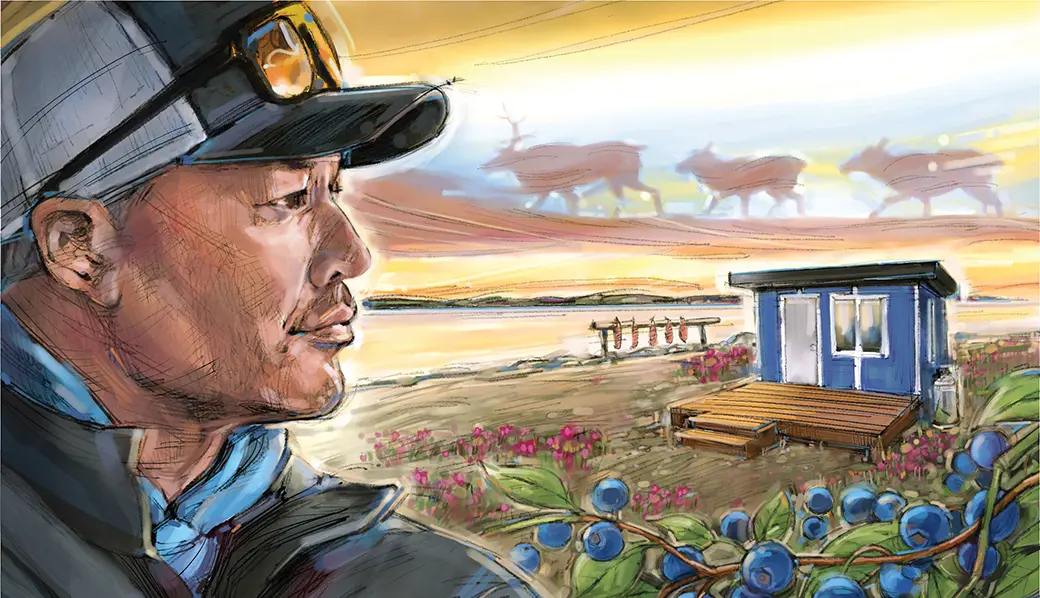
My cabin is right along the coast, in I&uuqtuuq, within an inlet across from my community of Rankin Inlet. It’s about 25 minutes away by boat in the summer or 90 minutes by ATV if it’s too windy to travel on the water. In the springtime, when we go by snowmobile, it’s maybe 45 minutes. Being out on the land is relaxing. We’re fishing, egg picking or berry picking. Or we go goose hunting or caribou hunting. These activities are really not work. That’s our time off; that’s our free time. In the late spring, it’s caribou meat-drying season. We have meat-drying racks there that my grandfather built 30 years ago, and they’re still standing.
My father built the cabin 37 years ago. We were the first cabin in the area for our family — my parents, me and my three sisters. Then my grandparents built a cabin, and an aunt an uncle, then another aunt and uncle. Then I built one. My cousin and sister-in-law built one. Right now, we have five cabins within that small area. My nephew calls it the village!
The word we use to capture the feeling of this place is kajjaarnuq. I think the closest word to capture that idea in English is “serene.” It’s peaceful. It’s beautiful. Kajjaarnuq has so many meanings that you put together in English, but in Inuktitut it’s just one word that has all these feelings. The cabin is a place of peace for me. For many of us within the family, it’s our happy place. It’s where we’re able to teach our traditions to our children. It helps with our language and passing on our culture. It’s a healing place. It’s amazing for our well-being.