Jarome Iginla

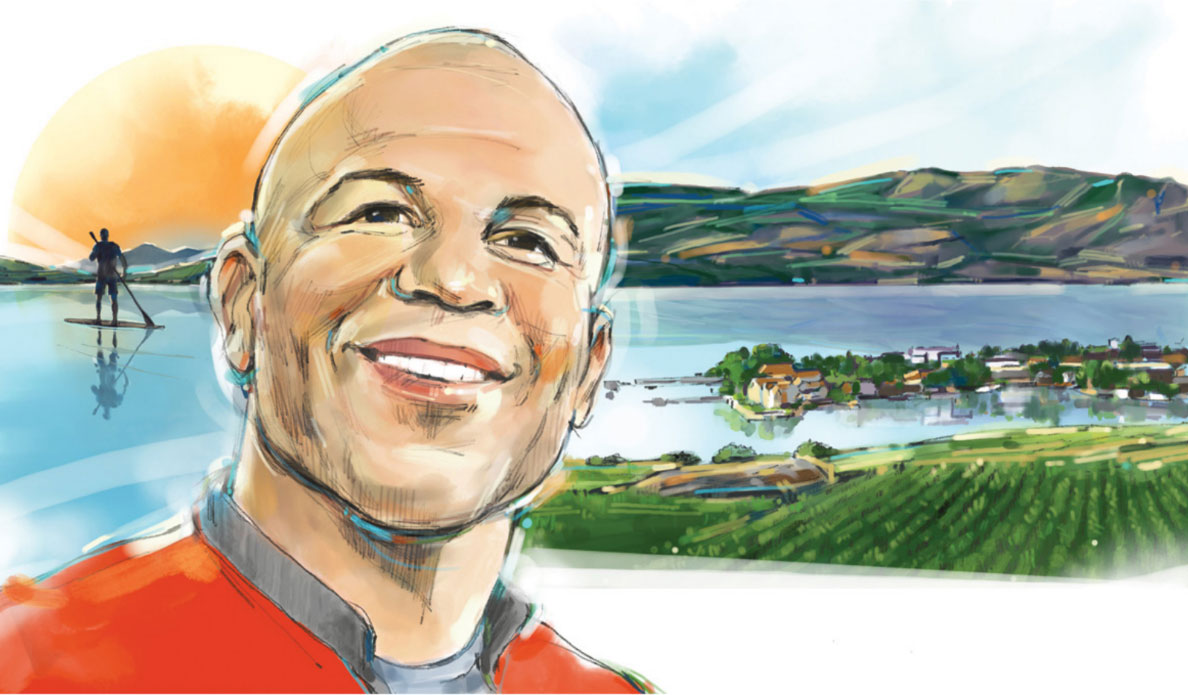
As an athlete, it’s essential to find the right balance between working, training and decompressing. I had an incredible career as a professional hockey player, but also a very emotional one — full of highs and lows. Since the early 2000s, I’ve been coming to the Okanagan to recover, train and strike that balance between pushing myself and recharging.

When I played for the Calgary Flames, the Okanagan was very easy to get to. Many hockey players in the West called it home, making it an ideal place to skate and train. I quickly fell in love with the region — so much so that my wife and I bought a house and raised a family there.

As someone who loves the water, the Okanagan, with its dozens of lakes, seemed like a perfect fit. I have countless memories of trying new activities with my family, like tubing, paddle-boarding and kayaking, and I can still hear my kids screaming as they tumbled off their tubes. Learning how to boat didn’t come easy. Once, I had to call my teammate Chuck Kobasew from the middle of the lake because I’d accidentally wrapped the rope around the boat’s propeller. I haven’t made that mistake again.

It’s all these memories of the Okanagan that make the region my favourite in Canada. You can feel the excitement from visitors who are on vacation — there’s a certain buzz and special kind of energy in the air. You can hear the rumble of small planes; people setting off on their own little adventures. Orchards stretch across the region, from cherry and peach trees to blueberry farms. It’s rejuvenating. It’s just a wonderful place to live.

Louise Penny

I spent much of my life searching for “home.” When I was a journalist, I had to move every few years and I found myself getting frayed. Though I made friends, I always knew those connections were probably temporary. When my husband Michael and I moved to Knowlton, Que., we immediately knew we had found home. We didn’t know anyone, but something about the place connected with our DNA.

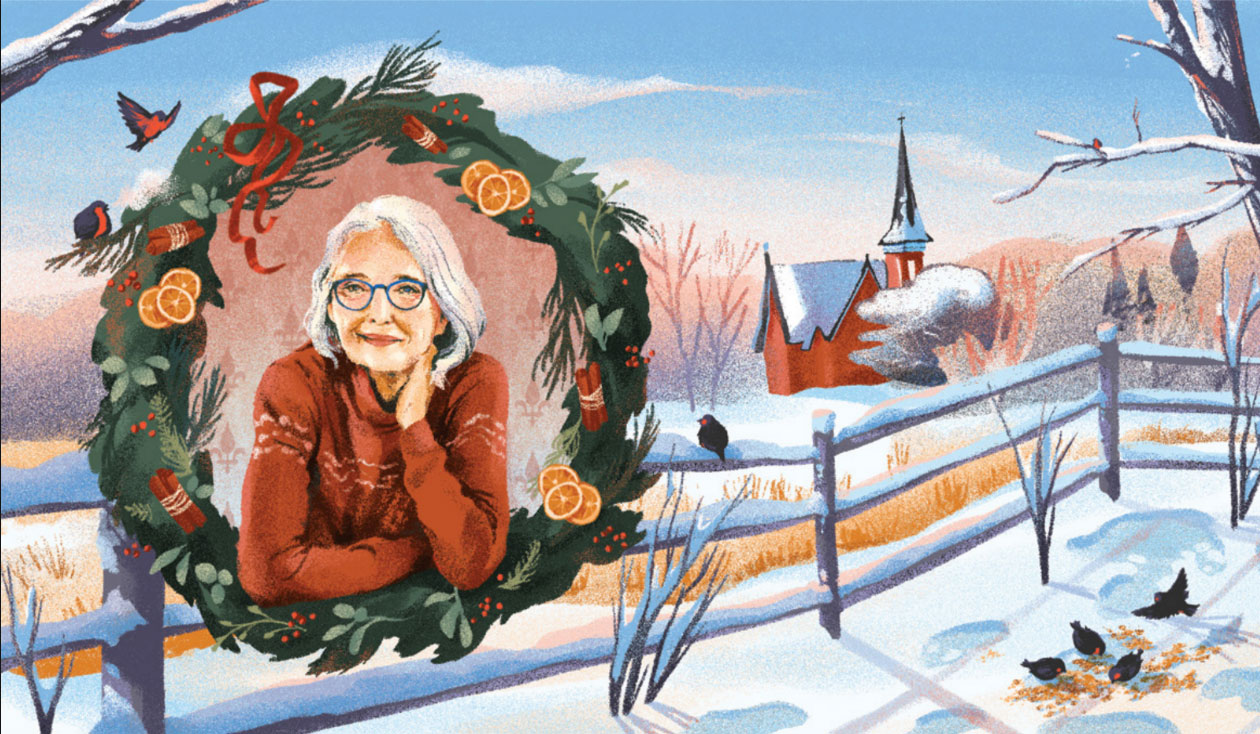
Our first Christmas in Knowlton, we attended the Christmas Eve service at St. Aidan’s, this tiny chapel that became the inspiration for the fictional church in my books. During the service, we exchanged peace-be-with- yous, and the two men in front of us invited us to a potluck after the service.

When we arrived, we walked into a house full of people who would soon become our friends. It felt as if they had saved a place at the table for us. The whole village was waiting for us, and we had been waiting for them. When I write about a fictional village in my novels, I try to capture the feeling of living in Knowlton, where there’s a constant sense of belonging, no matter the language, skin colour or religion. I’ve lived in several places and discovered that what matters most is having friends to talk to. I could live in a garbage bin if I had a friend beside me, in the next bin over.

C.S. Lewis wrote that we can create situations in which we are happy, but we cannot create joy. It just happens. For me, joy often arrives in silence, in stillness, in nature. When I am at my home in Knowlton, I’m filled with joy and gratitude. There’s a profound sense of place.

Sarah Harmer

I love a lot of places, but this is where I grew up, and it’s where I spend much of my time because my parents still live in the area. Mount Nemo is this outlier of nature on the edge of the suburban GTA [Greater Toronto Area]. It’s hard to develop because it sits up above the landscape, and so it has been largely preserved, except for the fact that the gravel mining industry has been trying to haul a lot of it away over the decades.

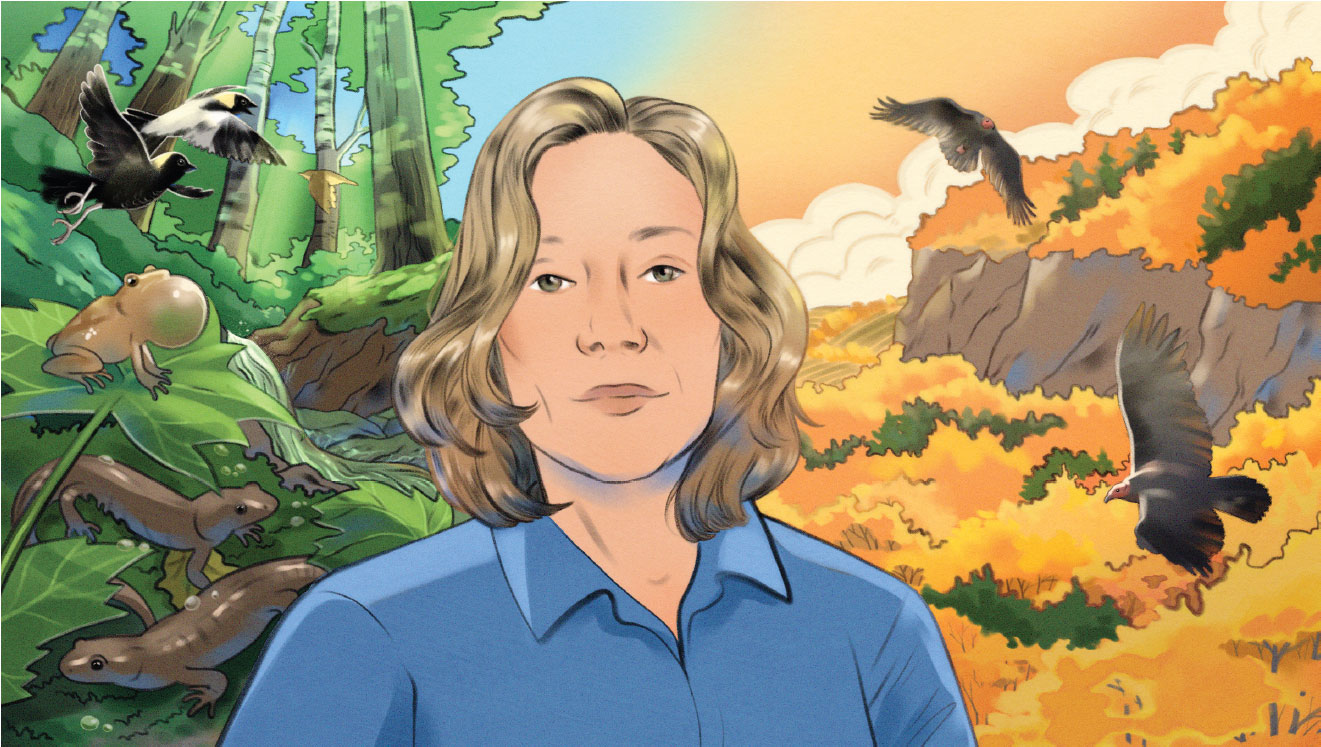
It is a place of refuge for so many rare and endangered species — and for people. The Bruce Trail goes right through Mount Nemo Conservation Area and takes you to a lookout across a patchwork of farmland and the skylines of Mississauga and Toronto. In spring, the forest is a cacophony. Bobolinks are flitting from the tops of the trees out into the middle of the fields where they’re building their nests. You can’t hear yourself think with the noise of the spring peepers and wood frogs, and if you go out at night during the first rains in late March or early April, the forest floor is moving with yellow-spotted salamanders and Jefferson salamanders. It’s Carolinian forest, with shagbark hickory and sugar maple and red and white oak, so in fall you get the splendour of the colours. It’s been called the fountainhead; so many creek systems originate at the top of Mount Nemo. I’m still working with community groups to safeguard it from a very unregulated industry that is trying to hollow it out.

I feel so lucky that I’ve been able to know this place for such a long time and come back to it in different seasons. It’s irreplaceable.

Denis St-Onge

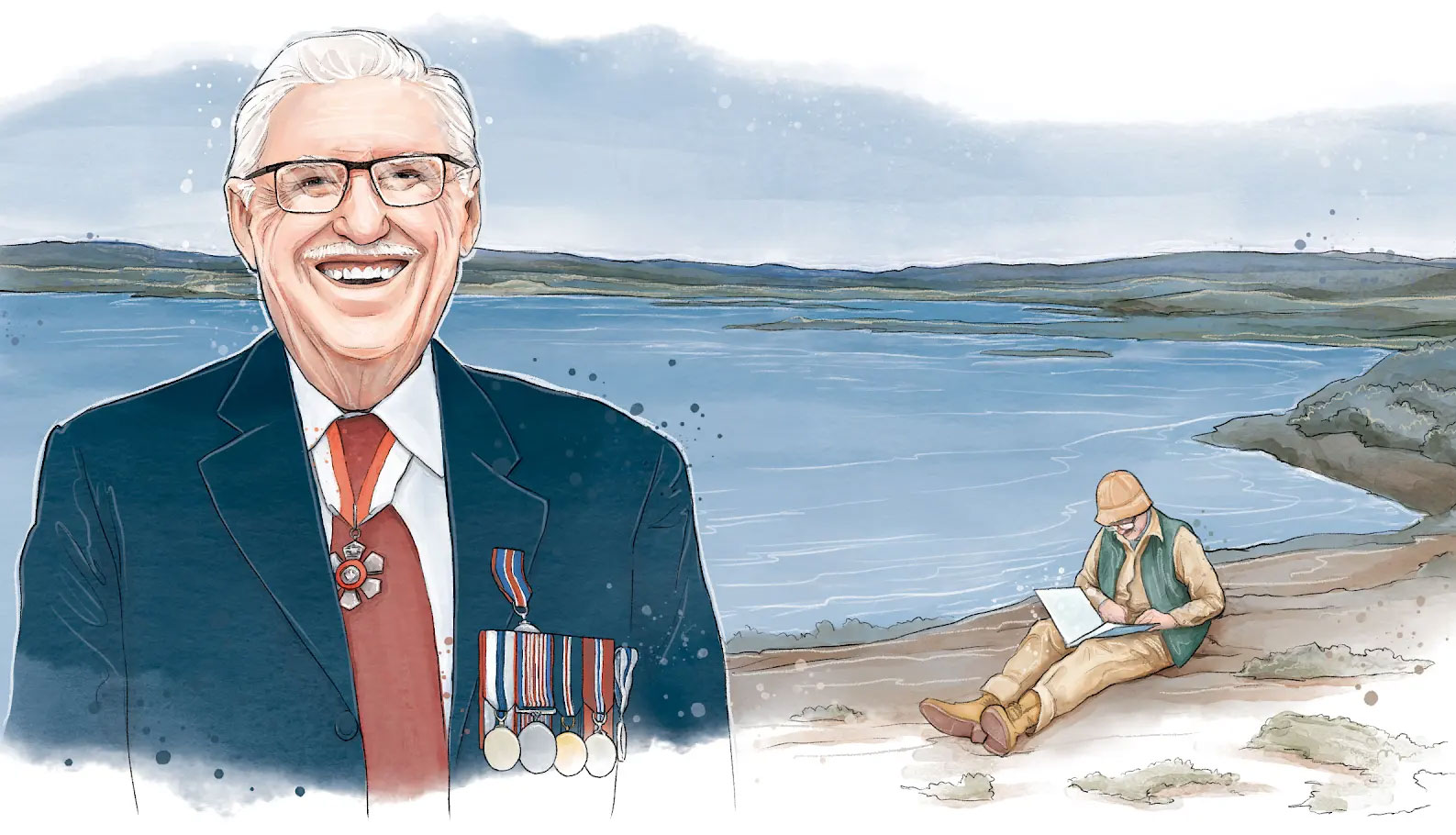
Imagine yourself under a vast dome of sky. Lakes stretch in every direction and streams weave through the terrain, trying to find their way to the sea. The ground is carpeted in low-lying vegetation, with bursts of brightly-coloured rhododendrons, but there are no trees. There is no traffic, no airplanes, no roads. You are entirely alone, completely immersed in this extraordinary scenery. Some people are scared, but others are completely mesmerized and bewildered by its stillness and scale. I’m the latter.

This is the tundra, my favourite place in Canada, which few people have the privilege of experiencing.

From the late 1970s through the 1980s, I spent about two months each summer working here with the Geological Survey of Canada. It’s difficult to describe the emotions I feel when I am there, exploring the Coppermine River region and westward towards Bluenose Lake, with incredible beauty surrounding me and no one else nearby. The closest word I can find is “fulfilled.” I’m not jumping for joy, I just feel utter contentment.

Over the years, I’ve had many assistants join me there. We’d walk more than 20 kilometres a day, collecting samples and taking notes, trying to explain the landscape we’re looking at. Some students would never walk alone on the tundra, terrified by its vastness. Others would fall under its spell just as I did, longing to embrace solitude and work solo rather than in pairs (which is now discouraged due to safety risks).

I still remember the first time I studied aerial photographs of the region. The images didn’t make sense to me yet; I didn’t know what I was looking at. I was lost, but I learned so much about the tundra in the years to come. In the process, I fell hopelessly in love with the place.

Natalie MacMaster

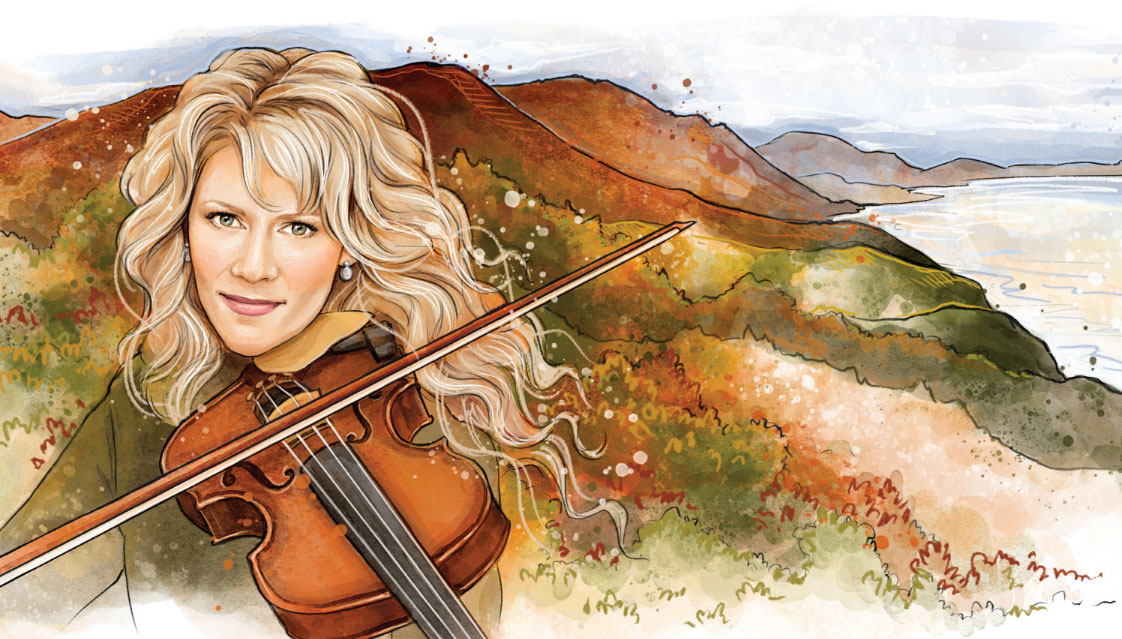
When I think about all the love I’ve received in my life, from my youth in a tight-knit family, to discovering my passion for music, to meeting my husband and starting our own family of nine, it all started in Cape Breton.

I grew up richly immersed in fiddle culture, square dances, the Gaelic language and gatherings. There were weddings and funerals, celebrations and sorrows. We’d have house parties with an abundance of food and drink, where I got to spend time with my relatives and appreciate the grandness of my extended family. People were always in good cheer, and there would be a lot of laughter. It was an environment that was so harmonious. I didn’t realize it at the time, but it was profoundly beautiful.

I have come to believe that the art reflects the artist, and when I look at Cape Breton Island, I believe it reflects the love of God. The rolling hills are sprinkled with pure, unmanicured vegetation. Wild roses line the roads. Alongside it, the ocean is so grand and life-giving, providing fish of the sea for the fisherman. It’s all-surrounding and all-encompassing. In a place with no coastline, I can begin to feel claustrophobic, but in Cape Breton, I have always felt I can get to the edge of the Earth.

When my husband and I got married, the bishop told us in his homily that two things in this world are eternal: music and love. When I return to Cape Breton, I am grateful for the fiddle culture that still exists and thrives there, knowing how deeply it shaped me.

Pujjuut Kusugak

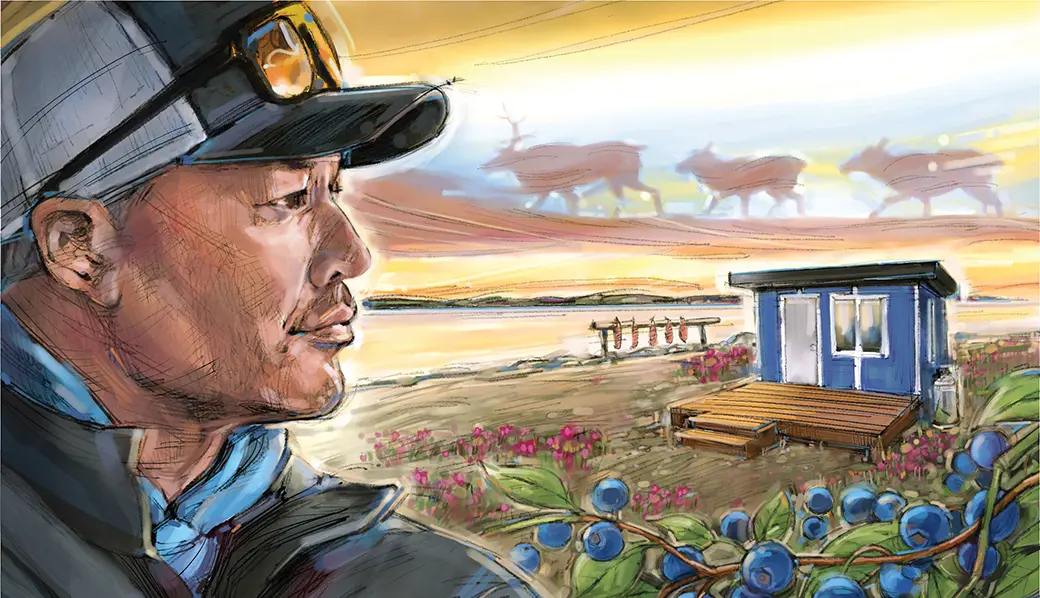
My cabin is right along the coast, in I&uuqtuuq, within an inlet across from my community of Rankin Inlet. It’s about 25 minutes away by boat in the summer or 90 minutes by ATV if it’s too windy to travel on the water. In the springtime, when we go by snowmobile, it’s maybe 45 minutes. Being out on the land is relaxing. We’re fishing, egg picking or berry picking. Or we go goose hunting or caribou hunting. These activities are really not work. That’s our time off; that’s our free time. In the late spring, it’s caribou meat-drying season. We have meat-drying racks there that my grandfather built 30 years ago, and they’re still standing.

My father built the cabin 37 years ago. We were the first cabin in the area for our family — my parents, me and my three sisters. Then my grandparents built a cabin, and an aunt an uncle, then another aunt and uncle. Then I built one. My cousin and sister-in-law built one. Right now, we have five cabins within that small area. My nephew calls it the village!

The word we use to capture the feeling of this place is kajjaarnuq. I think the closest word to capture that idea in English is “serene.” It’s peaceful. It’s beautiful. Kajjaarnuq has so many meanings that you put together in English, but in Inuktitut it’s just one word that has all these feelings. The cabin is a place of peace for me. For many of us within the family, it’s our happy place. It’s where we’re able to teach our traditions to our children. It helps with our language and passing on our culture. It’s a healing place. It’s amazing for our well-being.

William Shatner

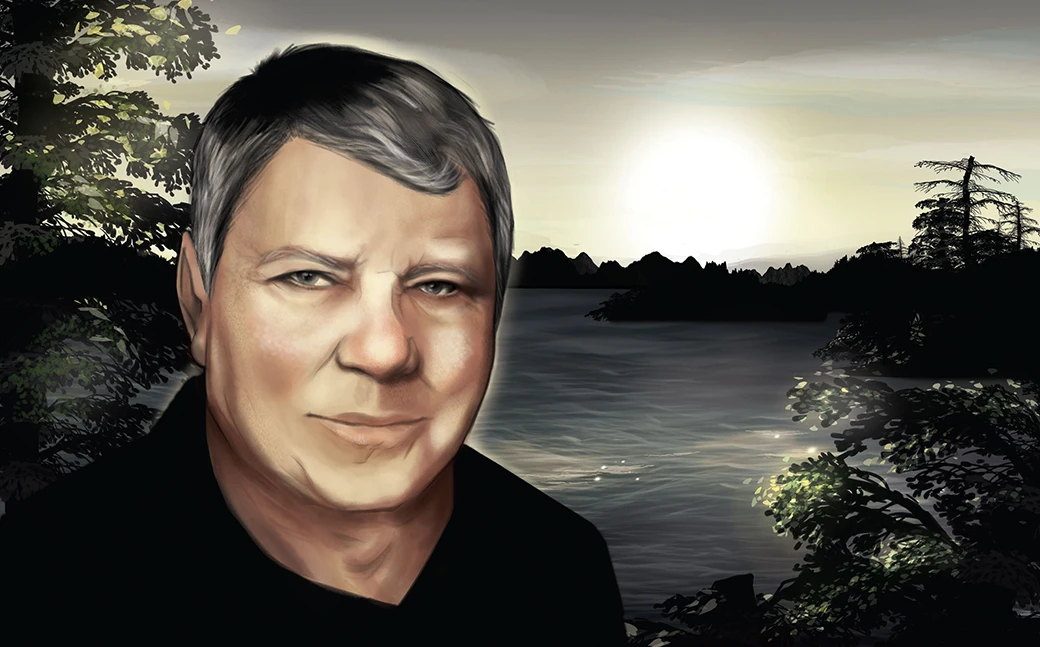
My childhood summers were spent at a cabin on Lac Long in the Laurentian Mountains north of Montreal, where I’m from. Our cabin fronted a dirt road, which is probably a highway now, and had a swinging screen door, the slap of which I’ll always remember. That’s where movies like The Yearling and books like The Red Pony, by Steinbeck, moved me the most.

It started off with three families on the lake. To get running water, we had to hand-pump it from a well to a cistern on the roof. When I was five or six, I offered to fill each family’s cistern for 25 cents, which was a fortune then. I hadn’t realized how hard it was to pump the water, so I’d get a cistern half-filled and be so exhausted that I’d have to come back the next day. I never was able to top off a cistern.

As the number of cabins increased over the years, a corner store finally sprang up. There was a group of 10 kids of different ages — I was around 11 or so — that would gather there on a Saturday night and dance to whatever was playing on the radio or to this French trio that would come and play country music.

Around that time I started to notice girls — and actually caught my first glimpse of a naked girl. It was as memorable as catching my first fish. A friend of my older sister’s was visiting our cabin, and while I was in my room at the top of the stairs (which had no door), the door to my sister’s bedroom opened and I saw her friend Diane dressing. She caught me looking and slammed the door. That memory has stayed with me to this day.

Ziya Tong

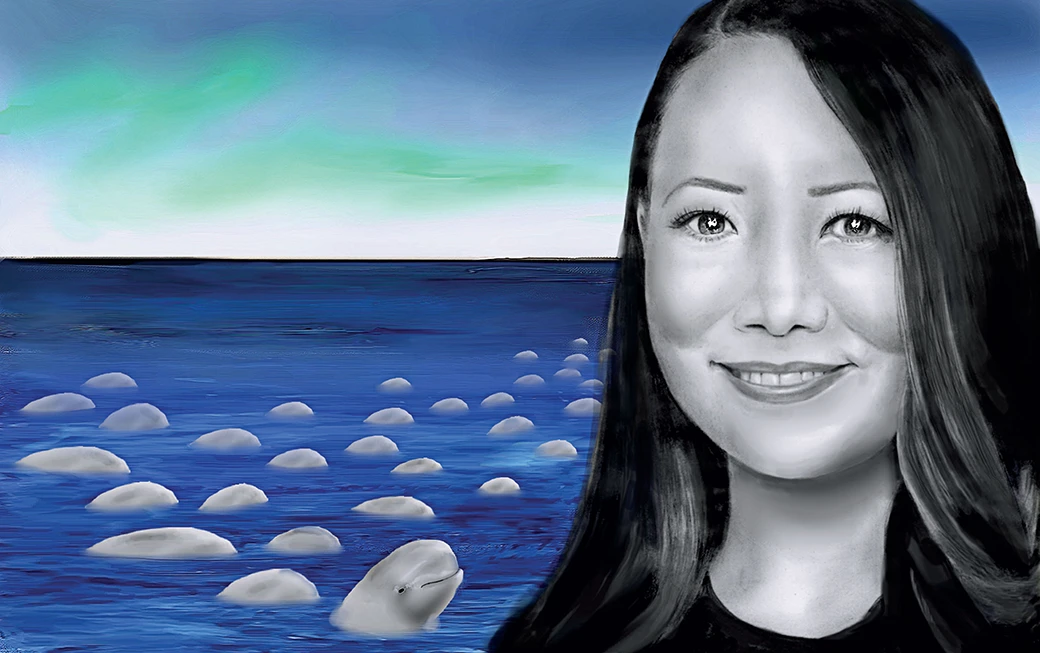
People talk about animal migrations in the Serengeti, but the most magnificent migration I’ve ever seen was 50,000 beluga whales in the Seal River, near Churchill. It was pretty spectacular to be out on the water and see what looked like little bobbing pieces of ice everywhere — and then realize that they were actually beluga whales.

I was there to do a story on monitoring beluga estuary habitats, which is incredible to see, too. The scientists have to be like cowboys and jump onto the belugas — safely, of course, with vets present — to capture and tag them.

After we did the story, I was with the folks at the Seal River Heritage Lodge, and they basically tied my feet together, gave me a snorkel and a mask, and told me to lie face down as they dragged me backward through the murky water. I felt like I was in an episode of The Sopranos. But then they told me to sing. And when I did, the belugas came right up to me. It was pure magic. I was very blessed to be there in the water with them.

I think that in this digital world people are increasingly looking for true wonder and solace, and that they find it when they go back out into the real world. I never thought you could go to Churchill and see something that would blow your mind, but you can. You’re there with the polar bears, the northern lights, the belugas. All the creatures are just going about their business, and there’s this tremendous sense of peace and order. I think it’s calming, being out there and knowing that you’re a part of something that’s so much bigger than you are.

Robert Bateman

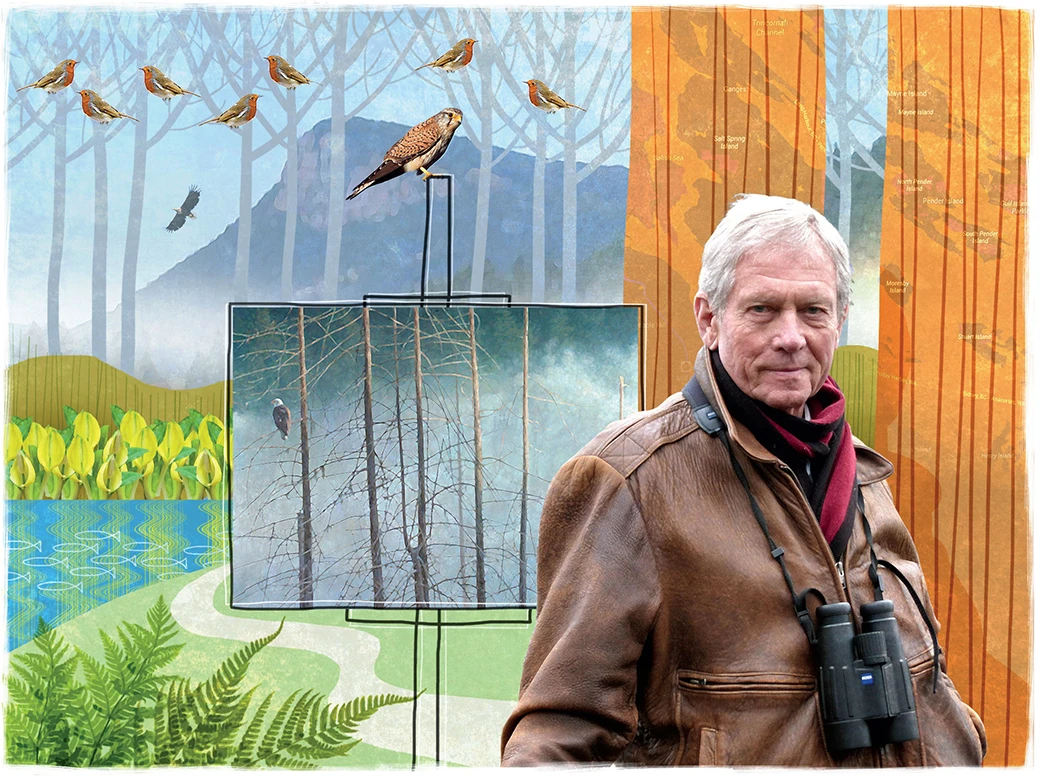
Saltspring Island feeds my soul. My home sits on 80 acres, next to a small lake surrounded by pastures and Douglas fir forest. MountMaxwell hangs in the distance, seeming to rise out of the sea.

Just outside my studio window is a tiny heritage orchard of four or five apple trees, and I often sit and watch the birds at the feeders. A 1930s farmhouse, where my granddaughter was born on the floor, lies beyond, and every time I look at it I’m reminded of family.

A sloping meadow leads to a swamp bordered by tall, dead cedars and teeming with birds. Often in the mornings, my wife and I sit in bed and watch the bald eagles, hawks and Steller’s jays from the window. The birds here are a source of inspiration for my work.

Every day after lunch, we hike one of my favourite paths in the world, a grassy old farm road that cuts through the forest. There is a stream that trickles through the woods and pools near this path, and it’s full of little fish. Gigantic swamp lanterns, with their big foliage and bright yellow flowers, line the pond and make beautiful reflections in the water.

I have made many trails through these woods, as I’ve done everywhere I’ve lived, and each has carefully chosen spots where I can stop to enjoy the view. But there are many parts of this forest I’ve never set foot on and maybe will never see.

Margaret Atwood

Visiting Canada’s Arctic is the kind of thing that people say changes your life. You have no idea what the planet is really like until you’ve been to the Arctic.

People often think it’s a colourless place, covered in ice, but it’s actually vivid with colour. Depending on which part of the Arctic you’re in, there aren’t many trees, but there’s a lot of growth that turns different hues.

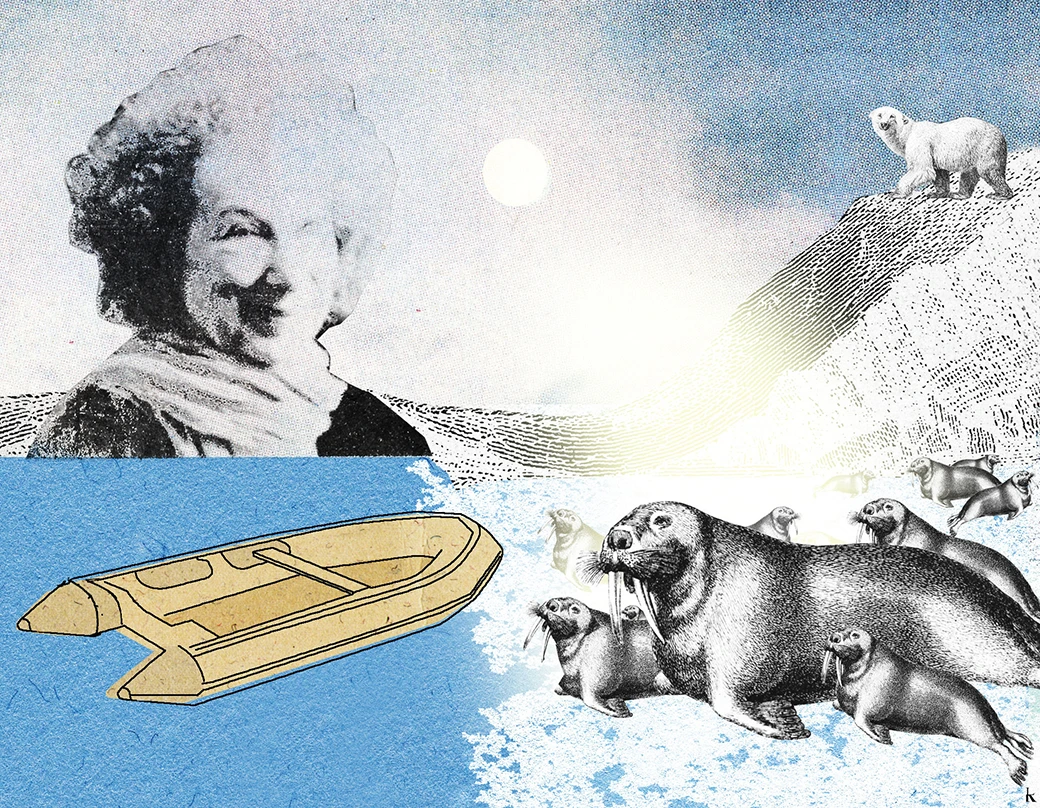
The wildlife in the Canadian Arctic is also impressive: bears, walruses, whales, seals — not to mention astonishing bird life in many places. During one trip with Adventure Canada, we were in a boat approaching a large rock that looked to be volcanic, because there were huge clouds of steam rising from it. But indeed there is no volcanic activity in that part of the world. As we approached, we saw that the steam was rising from hundreds of walruses that had hauled out upon this rock on a sunny day. The older ones were lolling about on the rock, and the younger ones were charging around in the water like a football team, snorting.

Another time I went to see a large field of stromatolites that had been discovered just the year before. Stromatolites are the fossilized mounds of blue-green algae that created oxygen in our atmosphere billions of years ago. Our planet didn’t come ready-made with oxygen; it was created as these organisms split oxygen off water. Every time you breathe, you are breathing an inheritance from those very fossils. In my short story, “Stone Mattress,” the murder weapon is one of these stromatolites. The word translates literally as “stone mattress,” and they’re very sharp and pointy when they fragment.

The Canadian Arctic is a fascinating place. Culturally, historically, geographically, it’s different from anything I’ve ever experienced anywhere else.

Jim Cuddy

I have been to so many incredible places in Canada: from the mouth of the Mackenzie River to the north end of Newfoundland and countless places in between. But the most impactful place for me is Lake Louise.

I found myself living in the Rocky Mountains right out of high school, escaping a relationship that didn’t work out, and falling in love with the West’s wild beauty. I lived in Banff for a year working as a ski room attendant and spent the following summer in Lake Louise painting houses. It was during this time I was starting to delve into music and play in front of people. Almost every night after finishing work, my friends and I would play our guitars and drink and laugh. I have a vivid memory of my friend Mike and I walking up a road from a campground, and though it was an arduous uphill trek, we were singing “Late for the Sky” by Jackson Browne at the top of our lungs.

The Rockies are invigorating. They’re enlivening. The last time I was at Lake Louise, my wife and I were celebrating our 40th wedding anniversary. We fell asleep to the sound of the rushing river. The mornings brought a crispness to the air I could smell, and a cold that didn’t bother us at all. We swam everywhere we could — from Moraine Lake to the Bow River — despite glacial temperatures. We spent time mountain biking, too, coming across signs warning us of bears in the area. The mountains have a way of waking up your senses and making you conscious of every moment.

Gordon Lightfoot

From east to west, up into the Arctic and all the other wild places I’ve been, so many have poetic imagery that, fortunately, I’ve had the ability to translate into words, into songs. They get your imagination working for you.

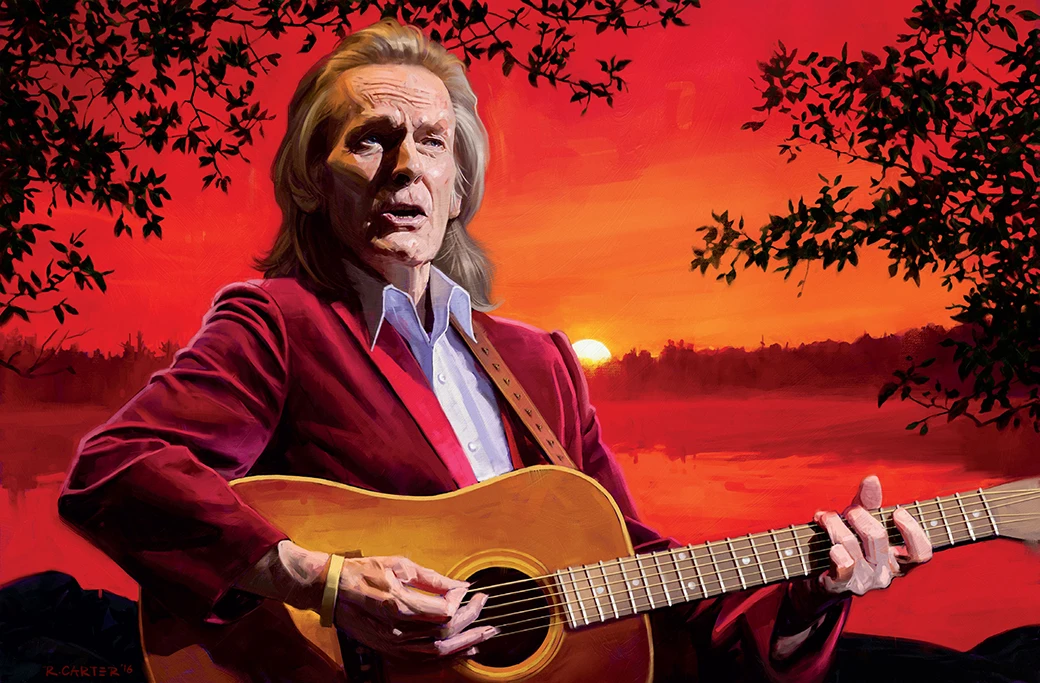
But of all places, Orillia, Ont., my hometown, was the greatest influence. There was always music. In Grade 7, I made my first recording for a parents’ day event. It was “Irish Lullaby,” and it got played over the school sound system. I was taking music classes, then, performing the Irish tunes Bing Crosby was recording at that time for Orillia’s ladies’ committees and the men’s Lions Club, and all through high school I sang with a dance band. My girlfriends used to sit on the sidelines at the big school dances and wait for me. They were very good about waiting.

My friends and I fished winter and summer on Lake Simcoe and Lake Couchiching. I remember one winter that had been so cold, all of Lake Couchiching was covered by black ice and no snow whatsoever. But mostly we fished in Simcoe, off Eight Mile Point. Every winter for five years, we’d go half a mile out, each in our own huts, and pull up whitefish and lake trout. We used to take that lovely whitefish down to the Buehler Bros. meat market and sell them to the guy who ran the place. In the summertime we caught bass and perch up on Couchiching’s east shore.

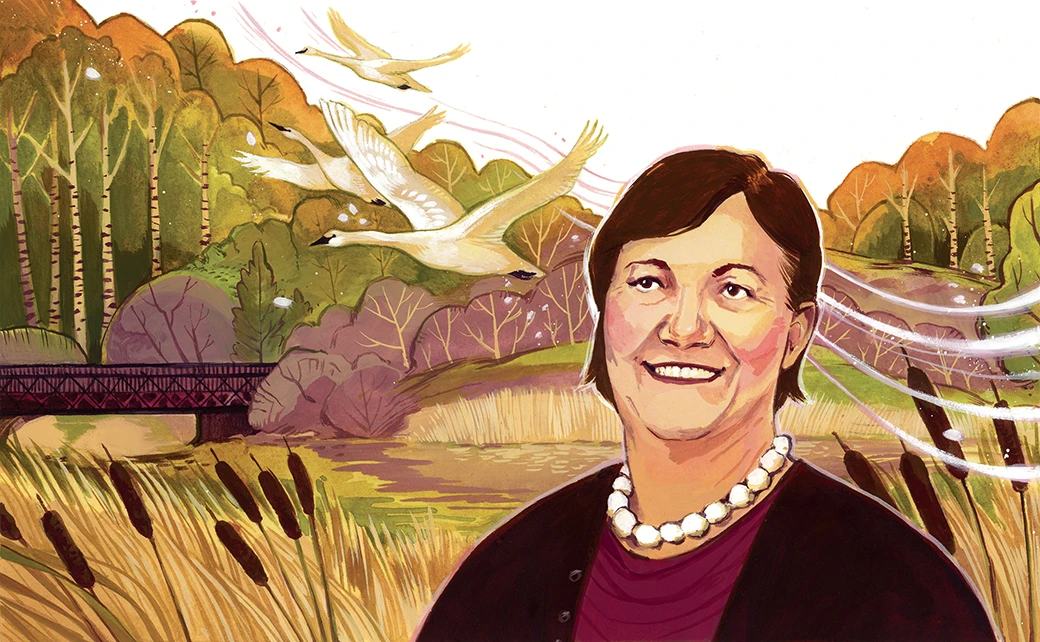
The memory of it all! I mean, I was like Huck Finn. You could name any number of streams and we’d fished them, including the North River area where we went for speckled trout. We could make it out there on our bicycles, you see. All of that rubbed off and it kept working its way into my tunes. It’s everywhere. My song “Pussywillows, Cat Tails” — that’s a perfect description of what it’s like there.

Chris Hadfield

If I could be anywhere, it would be at my summer cottage on Stag Island, near Sarnia, Ont. It’s still one of the few places on Earth that truly gives me the contentment of home. It’s a tiny, simple house that was built in 1896, and it’s a place I’ve been going since I was two years old. It’s a refuge, where I’m treated completely normally and where I’m very close to the simplicity of life and nature. I think a lot of Canada is just like that.

My favourite memory of the place isn’t really specific, but more of a feeling. Each day begins as an unplanned, unfettered, simple opportunity. There’s no structure, just a list of things that you might get done and a list of things that you don’t have to do; you could spend the whole day reading a book, or canoeing the back canals, or walking to see how the fledgling oak trees are doing in the south end. The place has a lifetime of gentleness at its core.

It’s not a holiday destination: it’s more of a way of life. I spend half the year there. At least I did before I became an astronaut 26 years ago. In fact, it’s where I saw Neil Armstrong walk on the moon. As I mention in my book, An Astronaut’s Guide to Life on Earth, it was very late on the evening of July 20, 1969, when we traipsed across the clearing to our neighbours’ cottage and jammed ourselves into their living room, along with just about everybody else on the island. Later, walking back to our cottage and looking at the moon, I knew what I wanted to do with my life.

Alex Trebek

I spent three years in boarding school at University of Ottawa prep, and then three years at the university itself. They were some of the most formative of my life, so Ottawa holds a special place in my heart.

I grew up in Sudbury, but it didn’t register all that much. When I got to Ottawa, though, I had to take things seriously. My parents had divorced and I got in trouble a lot. I was a rebellious kid. The priests at the prep school helped me reform. When harsh discipline didn’t work, they befriended me and showed me the right path. They turned my life around.

The high school was in the university administration building, and the dormitories were upstairs. I remember I had a crush on a girl who used to walk by every day on her way to Lisgar High School. We’d be outside playing and I would just … well, I never talked to her. We had three rinks set up outside school that we had to shovel the snow off, so I think I might have skated on the Rideau Canal once. I used to walk along it a lot, though, and have always liked that there’s so much greenery in the city.

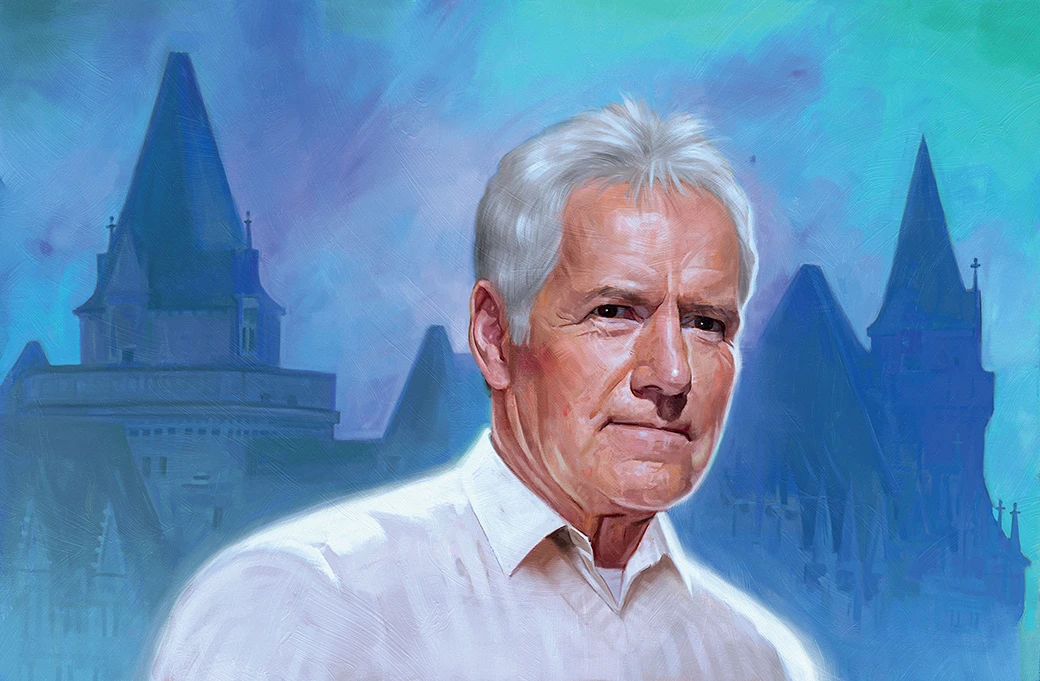
When we were out of school on the weekend, we’d take the streetcar over to Hull and go to the Gatineau Club, the Chaudière Club or Chez Henri, or just wander around the Byward Market. We had a good time. In university, a favourite haunt was the Château Laurier hotel. They had a great pea soup, a fantastic indoor swimming pool and a barbershop that made us feel special — when we had enough money to go there. They used hot towels on our faces and trimmed our sideburns with a straight razor. You felt like a rich businessman being pampered.

Sheila Copps

Cootes Paradise Marsh, on the western flank of Hamilton Harbour, is a hidden jewel. When people pass the Skyway Bridge, they see the city and the steel mills and Hamilton’s industrial heritage, but Cootes Paradise, a protected wetland, feels like a snapshot from the past because it hasn’t been touched. French explorer René-Robert Cavelier de La Salle made contact with Indigenous people in this area in 1669, and I can just imagine that it looks the same now as it did then.

Cootes Paradise is a huge swath of land with many nooks and crannies and an abundance of wildlife — it’s actually part of a UNESCO World Biosphere Reserve. Its physical beauty, where the calm water of the bay meets the Niagara Escarpment, is what moves me the most. When I was in elementary school, I used to go on hikes there with my friends. We were free-range kids in those days, so we took the bus from our east-end homes as far as it would go and then walked the rest of the way. We had a ball playing around the marsh, the adjacent Royal Botanical Gardens and the trails.

Hamilton has a lot of birch trees, and they seem to really thrive at Cootes Paradise. I remember spending hours just looking up at those gigantic birches while making whistles with the broadleaf grass that grows in the marsh, and I used to love swinging from the long rope vines that grow on some of the trees. One day, we completely lost track of time; all of a sudden, we looked up and it was dark. It was a magical day, like something out of Adventures of Huckleberry Finn.

Paul Brandt

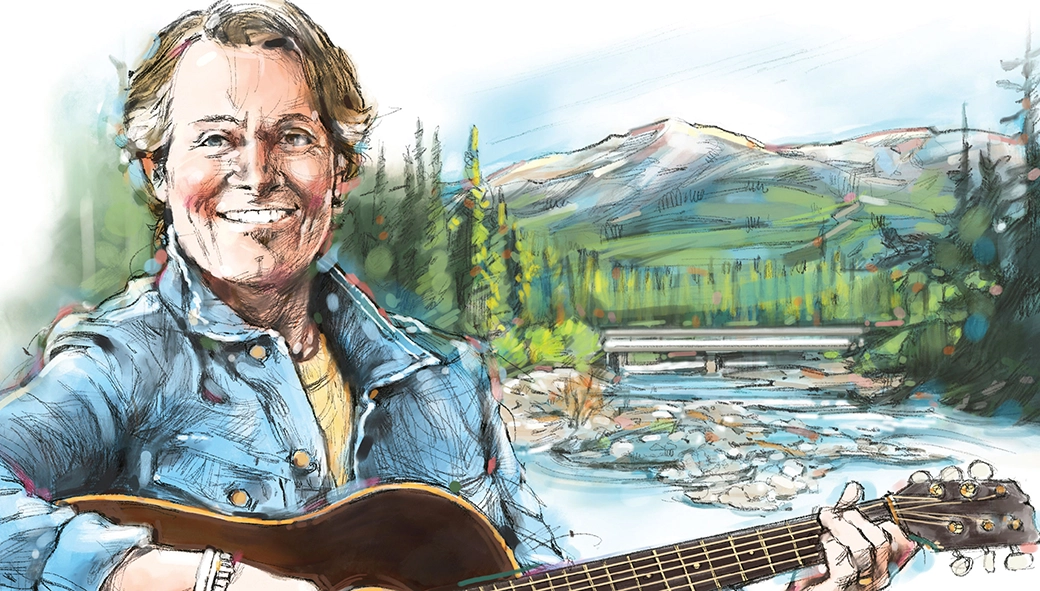
Living in Nashville for 10 years, my wife and I always had a vision to eventually move back to Alberta to be closer to our families. We have been all over the world, but there is something about a particular spot in Alberta, the Bow River that flows through Calgary, that just kept drawing us back there. It’s really one of my favourite places on the planet.

I think back to stories my dad used to tell me about how the river was wilder when he was young, flowing faster and deeper before all the dams were built. That image has always been inspiring to me. The river is where Calgary was born, where Indigenous populations decided to put their first camps. The river embodies the spirit of Alberta.

The Bow River is unlike any waters I have ever seen. You can float on a boat past the Calgary Tower and drift underneath the Peace Bridge, absorbing the sights and sounds of the city. An hour or two later, you could be floating alongside bluffs with huge peaks that overlook giant valleys, wheat fields and wild grasslands. If you look west, you can spot the snowcapped Rocky Mountains in the distance.

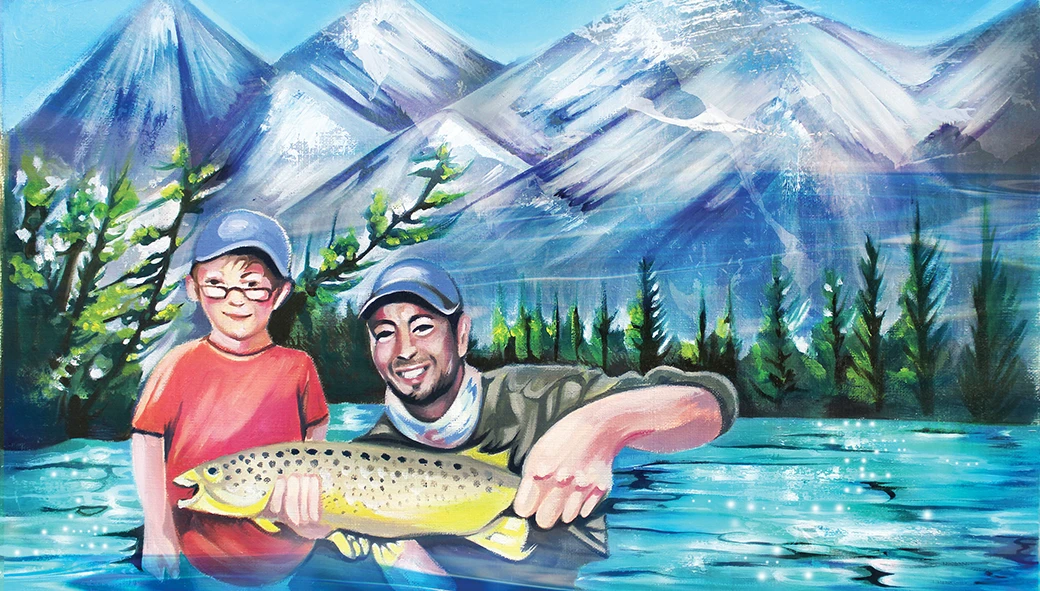
I often think about how my dad grew up there, how I now fish there and how my children are now going to have the opportunity to grow up and do the same. I think back to my son’s first fishing trip at the Bow River when we caught a large brown trout and then released it back into the water. It was so special to be able to share that moment with him, and it felt like I was passing this tradition along.

Dan Aykroyd

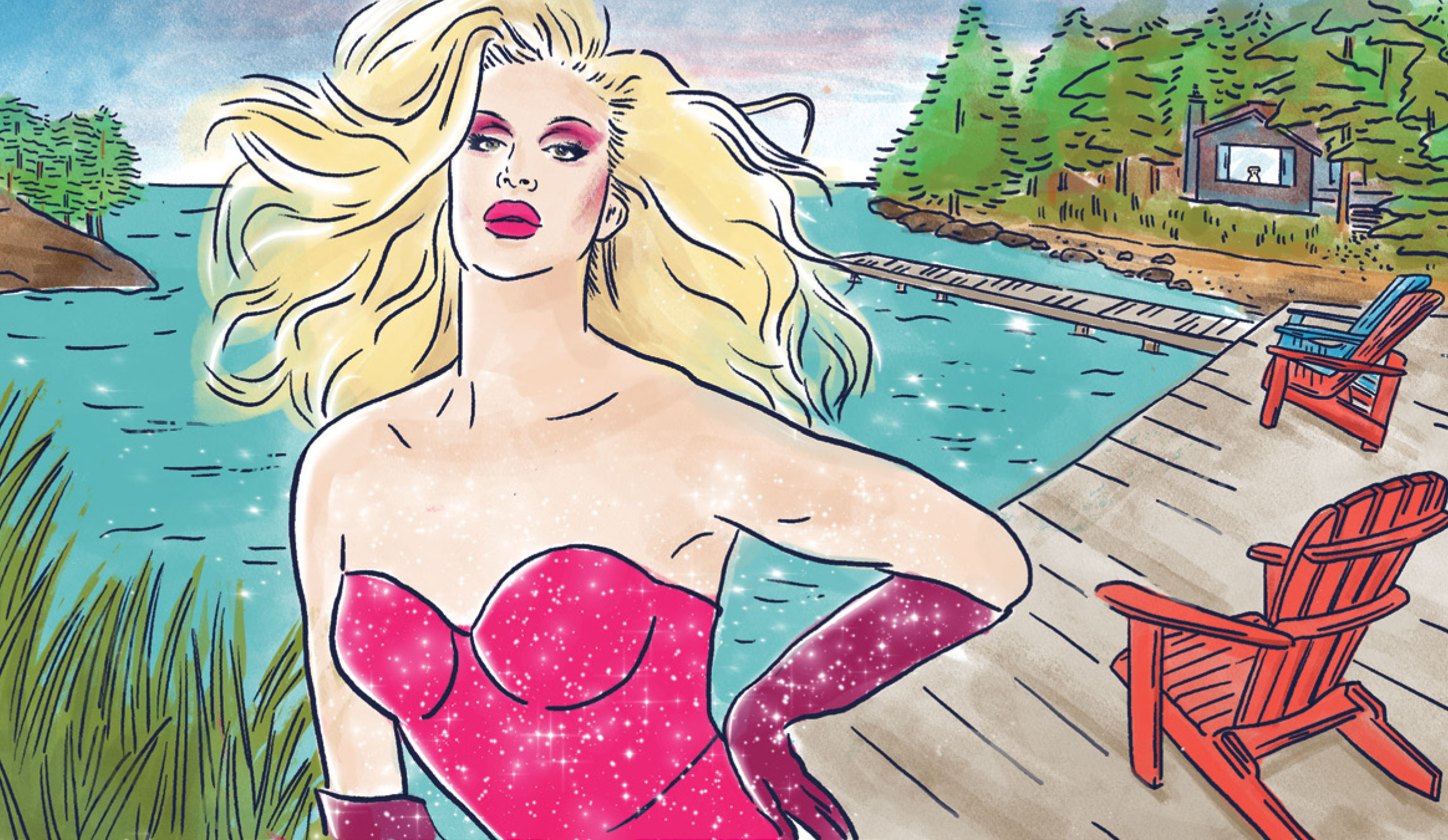
My favourite place in Canada is the island that I own. On Canada Day, 1987, I was driving my boat on Loughborough Lake, north of Kingston, when I saw this island for sale. Islands almost never come up for sale, so I spun around, raced into the local real estate office and asked them about it. The agent told me its name was Loon Island. This was the day after the new $1 coin with the loon on it came out. I took it as a sign and bought the island, and it was the best money I ever spent.

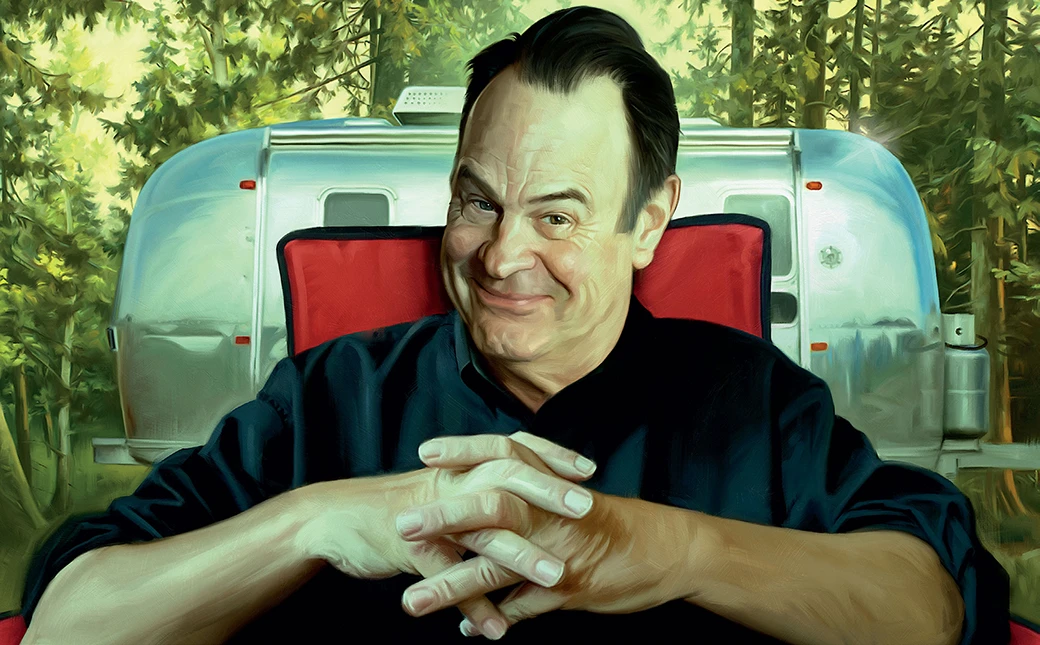
Loon Island is basically a granite hump, about three hectares, right in the middle of Loughborough Lake. I have a very spartan camp there with an Airstream trailer that will never roll again, a cooking tent and a firepit, and I don’t think I’m going to improve it much. Over the years people have encouraged me to build a house or cottage, but I like the campground feel of it. It has that classic Group of Seven look with the windswept pines and cedars. The sunrises and sunsets are beautiful. Food always tastes better on the island.

Some friends and I floated the trailer over on a barge. The very first night I spent there, we were inside avoiding the mosquitoes when all of a sudden loons started calling all around the island — first one, then two and three and four, with this welcoming cacophony of their cry. It was as if they were acknowledging me as the new resident of the island.

I like to go there to write; I’ve written a couple of screenplays there, and other pieces. But mostly I go just to be there. There’s nothing like getting up in the morning and going down and slipping into the water for a swim and coming eye to eye with an otter or a fisher. That’s how I connect with nature.

Coeur de pirate

My favourite hideaway in Montreal is where Parc Jeanne-Mance and Mont Royal meet, between Mont-Royal and Duluth avenues and St-Laurent Boulevard and Park Avenue. Jeanne-Mance is known among Montrealers as the place to hang out: the area is historically charged, it’s close to where Mordecai Richler lived and the Montreal equivalent to parks such as Trinity Bellwoods in Toronto, Stanley Park in Vancouver or Major’s Hill in Ottawa.

I remember spending most of my summers there as a teenager, so it really influenced the person I am today. I was from a very residential part of Montreal a bit farther north, so going downtown — and seeing Montreal for what it was — was going to Jeanne-Mance. There’s something about the trees, the light and the cultural happenings that occur in the park. It hosts concerts and people play ball; the space really brings people together.

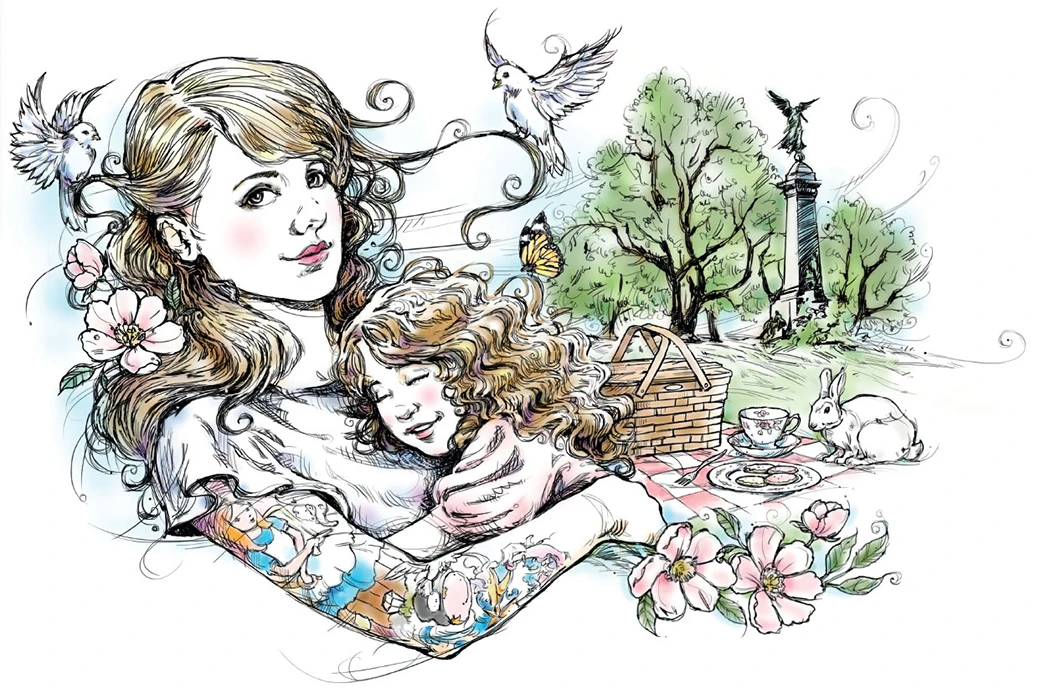
When I started frequenting downtown, around 15 years old, I spent much of my time there — and the same people I grew up with still visit. Since becoming a mother, visiting the area with my daughter has become special, too. Our first home was in the Plateau, so bringing her to Jeanne-Mance was really easy. It’s something you want to share with your kids. We visit Café Santropol — a local establishment my mom liked to go to that has been there since the 1960s — but my own family more often frequents Café Melbourne or Hof Kelsten. The real Parc Jeanne-Mance experience, though, is finding the perfect spot and setting up a picnic.

Alan Doyle

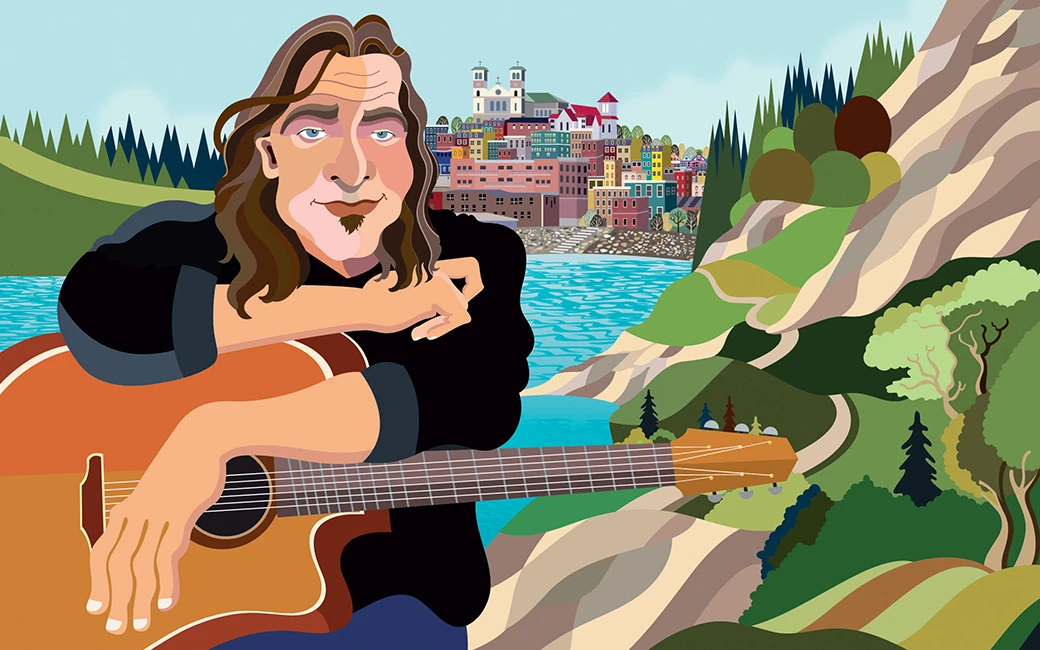
The first place I take people when they visit me in St. John’s is the North Head Trail at Signal Hill National Historic Site. It’s one of the most beautiful walks in any city in the world, rivalling the seawall route around Vancouver’s Stanley Park or any of the walks between the beaches in Sydney, Australia.

The first time I was on the trail would have been when I was about 19 or 20, shortly after I moved to St. John’s, but it’s the same now as it was 25 years ago. It’s got the same beauty and the same physical challenge — I now find myself doing it for exercise a few times a month in the summer. It’s also still pretty tricky because parts of it haven’t really been modernized: in some places, you still have to hold a chain for stability, but that’s part of what makes it so authentic.

If you go up to Cabot Tower at the top of Signal Hill, then you’ll get this amazing view of the ocean on one side and the city on the other. From there, you can take the trail right out to where you can see Cape Spear, the most easterly point in North America, and, if you’re there at the right time of year, icebergs or whales. It also leads you along the steep rock-faced hills above The Narrows, the entrance to St. John’s Harbour. When you’re on that part of the trail, you can turn, look back at the city and imagine you’re seeing what some of the first sailors here would have seen so long ago.

Wade Davis

I was first introduced to northern British Columbia when I worked as a park ranger in Spatsizi in the mid-1970s. I fell in love with that part of the country and its vast, expansive wilderness. As a park ranger, I’d often supply out of Tatogga Lake and fly over Ealue Lake. I remember spotting this funky-looking fishing lodge. As a young man in my 20s, I remember thinking how incredible it would be if I could purchase a lodge like that. My wife Gail and I ended up purchasing the lodge in 1987. We have raised our children there. Without a doubt, it is the most special place in Canada for me.

Ealue Lake is home to the Tāhłtān Nation. When we lost the battle for Todagin Mountain, which is now the site of an open-pit copper and gold mine adjacent to our lodge, it was devastating. I remember my daughter taking off in one of our old chestnut canoes. I found her in the darkness sobbing. She was very attached to the lake and was deeply bothered by the mining project.

I promised her that no matter what unfolded with the mine, we’d wait it out. I told her when the mine is finally exhausted, I might not be alive to experience the return of the world or the return of silence to the lake, but she would be. And her children would be, too. That’s the sense of continuity and loyalty that I’ve learned from the Tāhłtān, among many other things. The lake has been such a rich, important anchor in my life. As Canadians, we are predominantly urban people, but we all yearn to live on the edge of the wild.

Elizabeth May

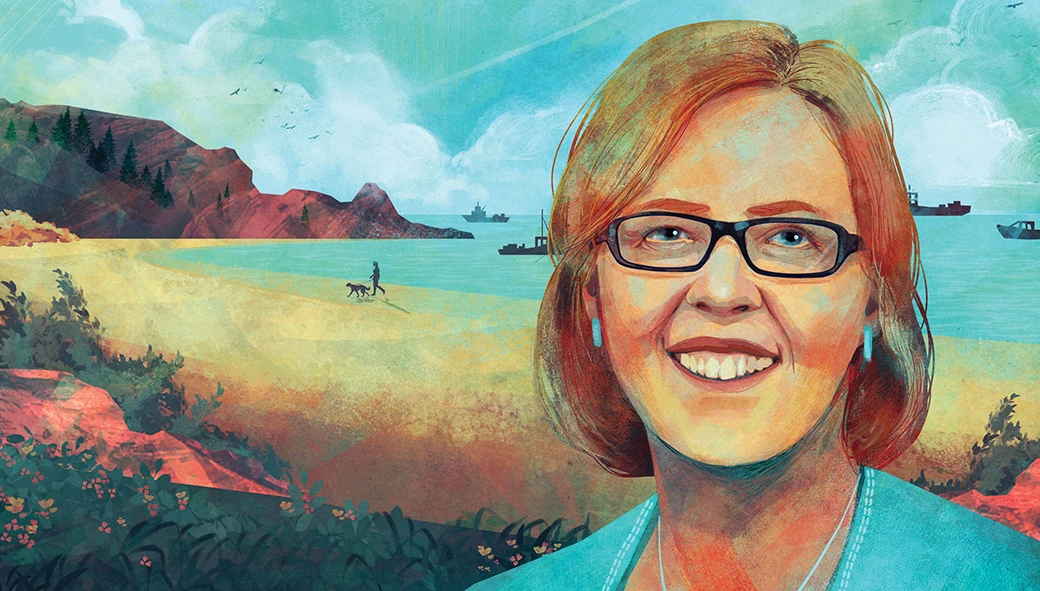
As an MP of Saanich-Gulf Islands off Vancouver Island, it is hard not to fall constantly in love with the breathtaking views I wake up to. But my heart is on the East Coast. For me, Margaree Harbour in Cape Breton, N.S., is like a magnet — it pulls me in and doesn’t let me go. Though I wasn’t born there, it’s the place that feels most like home.

The entire island is breathtaking, but the beach on Margaree Harbour is especially beautiful. It is almost always deserted, which makes it a place of true solace, healing, renewal and joy. My daughter and I agree there’s something about the Atlantic Ocean that makes the air feel saltier and more energized, feeding my soul in a way that nowhere else does. I’ve spent countless hours on that beach, whether it be walking my dog or getting together with my friends and family to play music around a campfire.

I moved to Cape Breton Island in my teens — it’s where my parents passed away and my brother and sister-in-law still live, so there is a nostalgia for the time spent there throughout my life. I go to Margaree Harbour at least once a year, which really envelops the saying “You can take the girl out of Cape Breton, but you can’t take Cape Breton out of the girl.”

There are talks about drilling a deepwater oil well in the Gulf of St. Lawrence, which includes Margaree Harbour. This could do incalculable damage. I am very committed to protecting every part of Canada, but I feel like I have a personal relationship and responsibility to protect the Gulf of St. Lawrence and all the coastlines along Cape Breton.

Roberta Bondar

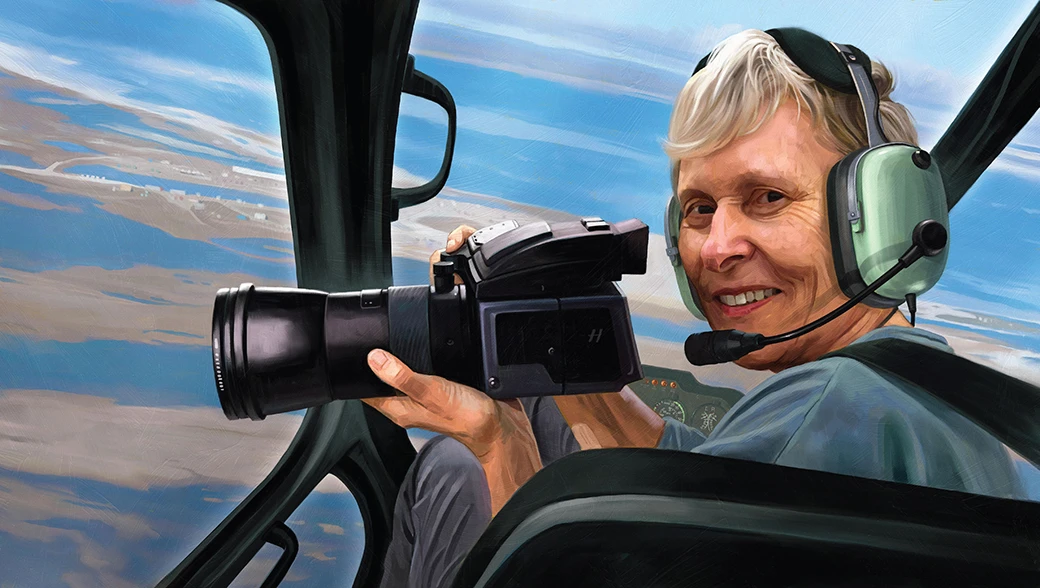
Right now, my favourite place to be is in a helicopter with my camera, gliding over Canada — from tundra to prairies to temperate rainforests. They’re places I thought I knew or that I hadn’t been able to get to. Recently, I flew over Southampton Island, one of the most southern islands of the Arctic Archipelago, following endangered and near-threatened birds, such as the red knot, that nest on the island. To soar over this magnificent terrain, observing its striking sculpted edges that spill out into Hudson Bay, and understanding that this is part of the country very few people get to see, was indescribable.

The idea that there is a different perspective to life is an important one. It’s about trying to grasp what a person’s history is on the planet at a particular time, while understanding that the natural environment is something that’s been here long before us. When I was in space and saw the edge of the Earth contrast with the black universe, it had a huge impact on me. That’s why, since my space flight, I look for clear horizons on the surface of this planet, like the prairies or the Arctic. When we look at our country from above, everything suddenly feels so important, because we are seeing the interface between the universe above and the planet below.

For me, what’s most special about this country is appreciating that life on the surface of this planet has been there for hundreds of thousands of years. It’s that kind of permanence that humbles me.

Justin Trudeau

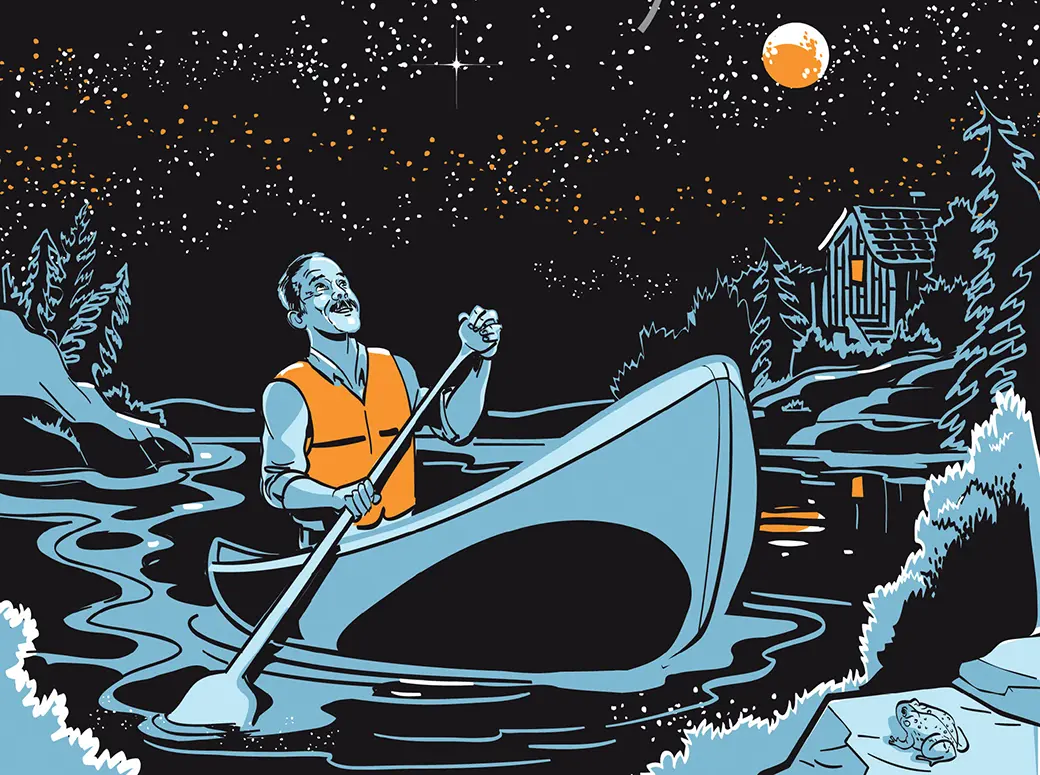
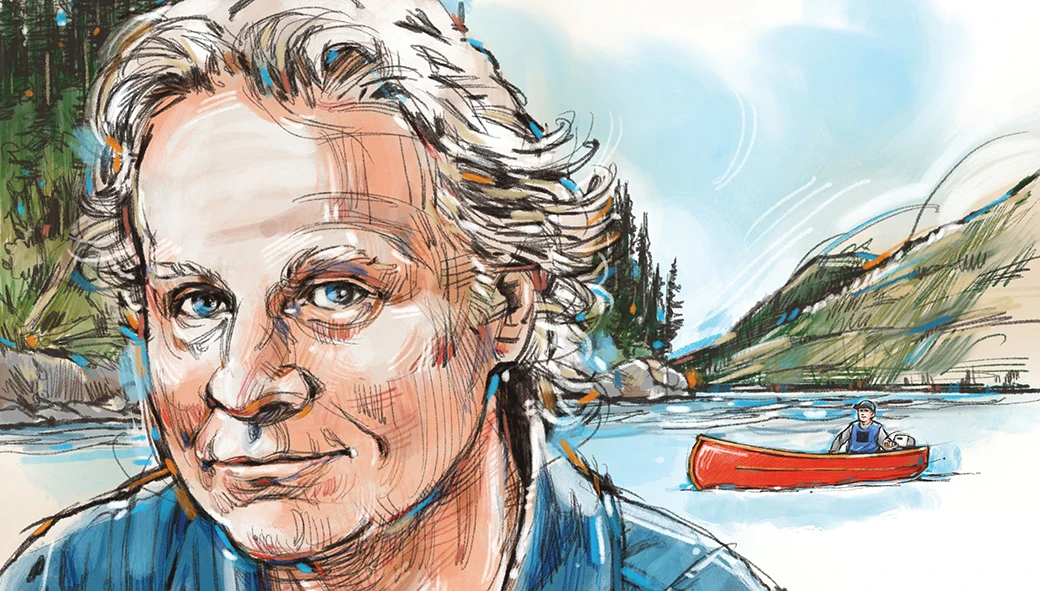
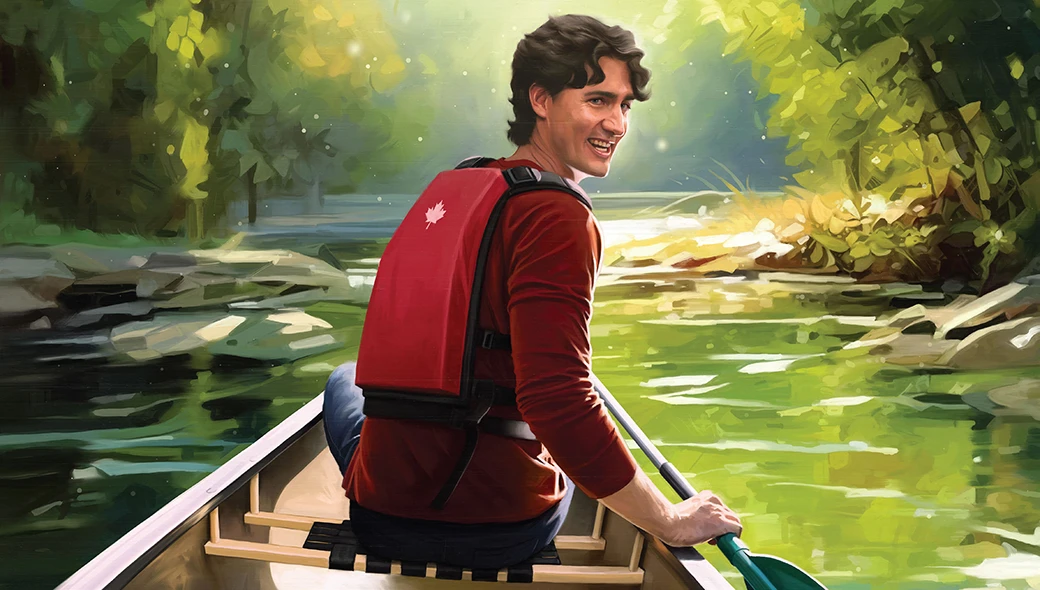
My favorite place in Canada is in the stern of any canoe I happen to be in, anywhere. I can’t tell you my favourite place because there are so many more lakes and rivers that I hope to paddle — maybe the next one will be my favourite! But if I’m describing the perfect stretch, I picture not full-on rapids. It’s ripples. Nice rapids around the bend, but we’re not quite there yet. I don’t see any signs of habitation. I’ve got packs in front of me and I’m in my canoe with someone I love. Maybe my daughter in the bow. And we’re excited about what’s around the bend and looking forward to whatever it is we’re going to mess up on the campsite for dinner that night.

The image of paddling down rapids is, for me, a way to understand how you navigate through life — the currents bring you one direction and you can sometimes eddy out and pause a little bit and catch your breath. You don’t decide where the rocks are; you just decide how to make it around them. And you have to respond to what life throws at you as you keep paddling down the river.

In this era of social media and everything digital and tech, getting out there is all the more important — getting out there into something that requires your presence and your peacefulness at the same time, even as there are moments of adrenaline. There’s a concreteness about canoeing and a spirituality about it that I think is just foundational for the soul.

Jazmyn Canning and Crystal Drinkwalter

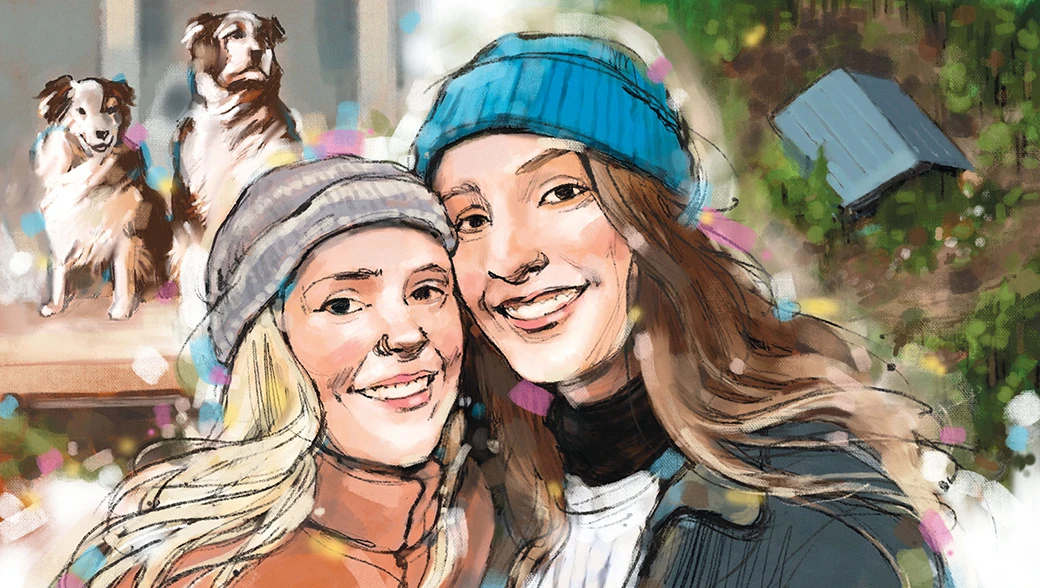
When we met, we wanted to travel and to spend the majority of our time in nature, and “van life” allowed us to do that. We were always chasing remoteness, and without even knowing that we wanted to live off grid, we kept finding these off-grid spots. Our cabin is very much the backyard we were searching for in our van. It encompasses all of the things that we love about nature and camping, but now it’s our own. Of all the places we’ve been in Canada, the cabin feels the most like home — and we’ve gone across Canada three times. There’s something about the Maritimes: the people are so incredibly warm, and it’s slower paced. We can live remotely but still only be an hour and a half away from stores.

Of course, we picked somewhere super remote and in nature; that’s something we’ve always been drawn to. It’s where we love to spend our time together and where we feel the most authentically ourselves. We have a small lake, and it’s very quiet and good for canoeing and kayaking. There’s a river that comes down through the property, and we see the trout swimming to the ocean. Before we installed electricity, there were some tough times, but going through these challenges made us more resilient. Living here can be isolating, so we make it a priority to have friends and family visit. Everyone talks about the quietness and says that they feel more present. People feel really rested when they’re here — it feels like a true getaway. Every morning, we have a coffee and walk down to the river. Waking up and being in nature never gets old.

Gurdeep Pandher

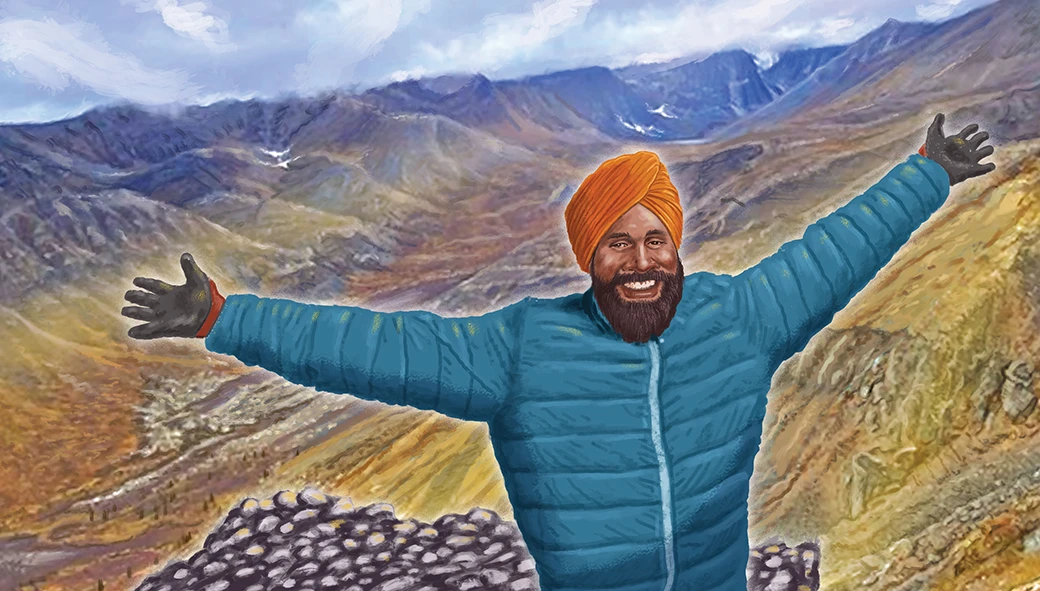
I love the spectacular scenery of Yukon’s Tombstone Territorial Park. One place I particularly love is the Grizzly Lake Trail. You have to hike for a little while, but you’re eventually met with some amazing scenery — it’s like something out of the heavens. You also see Grizzly Lake, in the middle of nowhere among the mountains. I’ve never seen any place quite like it. The beauty is untouched by humans and is reserved for the animals that are lucky to see it every day. That kind of beauty draws me to dance there.

When I am there, I feel connected to the land. I’m mesmerized by the views and by the power of nature. It makes you humble. I share a lot of Tombstone’s landscape through my dance videos. I think it has been really important for people living in other places, especially during the pandemic, to experience Yukon’s wilderness. It brings joy and positivity. Nature is powerful, even if you’re only seeing it through a computer screen. When people see a beautiful natural backdrop like these mountains, they connect with it right away.

Nature is a great healer. When we disconnect from nature, we don’t feel grounded. When I’m in nature I feel like I’m coming close to my source, where I originated from as a human being. This park has allowed me to understand that nature is supreme. We humans are not supreme; we’re simply part of the system. There are much bigger things in the world than ourselves. This park has completely changed the way I see my life on planet Earth.

George Elliott Clarke

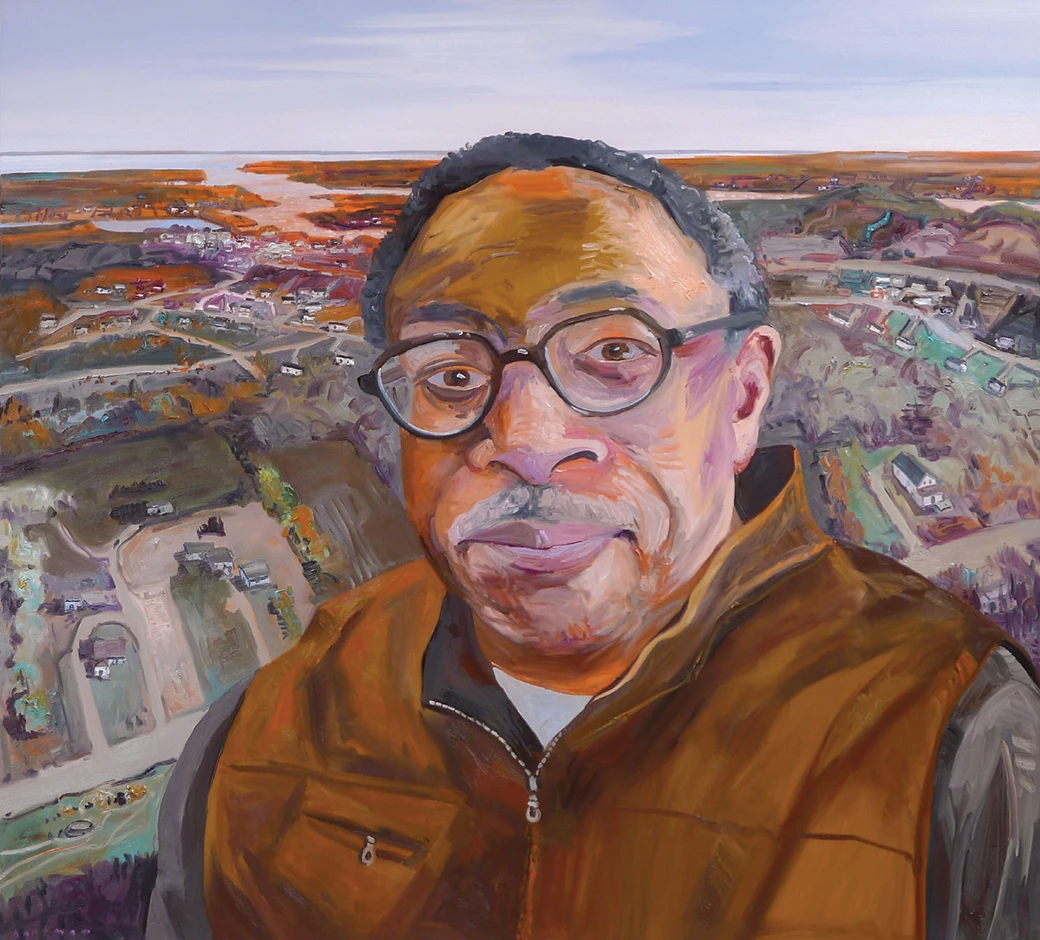
When I was becoming a poet at 15 or 16, I had all the stimulation of Halifax, but I knew I needed to be at Three Mile Plains. Three Mile Plains is 70 kilometres northwest of Halifax on the way into Windsor town, where I was born. Black Nova Scotians have lived here since planters brought dozens of enslaved people around 1760. My own maternal family arrived on the South Shore in 1813 and migrated to Three Mile Plains a few years later.

The colonial government gave the impoverished Black people poor lots of land. It was not arable; it was swampy, rocky. But the people formed communities. No matter how much discrimination we faced, there was a sense of identity and literal groundedness on our piece of rotten terra firma. Because in slavery, you couldn’t own your children — they could be taken at any time and sold away, as could your parents. For former slaves now able to say, “that’s my piece of land, my horrible, non-productive, non-arable piece of land, but it’s mine; that’s my house, these are my children, that’s my husband and that’s my wife.” To have all these kinds of connections rooted in a place is powerful.

For me, my connection to Three Mile Plains was folklore, and the people’s experiences were the foundation for any writing I was going to do. When I walk on my own land in Three Mile Plains, I look up and all I see are tree branches until I get to Heaven. My crabapple trees, my spruce trees, my pine trees, my grass, my anthills, my beaver skeletons. All gloriously mine. And maybe one day still, I might build something there.

Emmanuel Jal

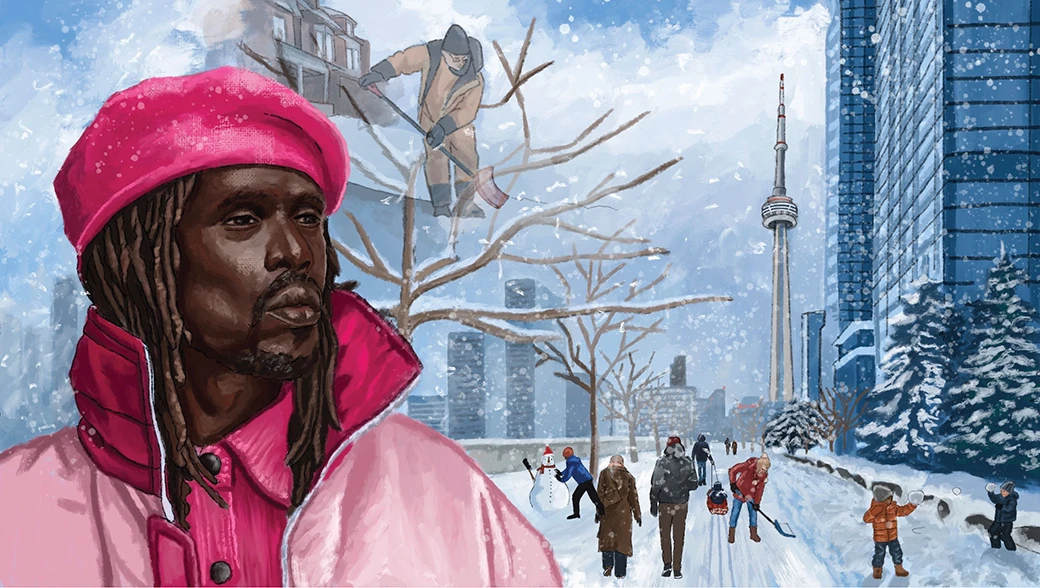
Home is where you are loved. Anywhere you are loved becomes meaningful. When I immigrated to Canada in 2012, it wasn’t Toronto’s beautiful views or rich culture that made this city feel so special. Instead, it was the people who welcomed me into their city with open arms and have made me feel like I’m at home ever since.

Toronto is a place where I walk out of my house and I don’t see my colour. After a big snowstorm one winter, I came across my white elderly neighbours shovelling off snow from my house and walkway, helping to dig me out. One of them is 87 years old, and he still did it with a smile on his face. They have always looked after me since the day I moved in.

One of the people that invited me into Canada helped with administrative tasks and was my main point of contact — though she refused to be paid even after being offered money countless times. She says she got joy out of just seeing me smile. The people here are amazing, and if they don’t know, they need to know.

I feel safe in Canada, particularly in Toronto. I grew up surrounded by violence, death and trauma, and now I am running my own record label and have my own wellness business. I grew up in a warzone in South Sudan and became a child soldier, wielding an AK-47 at seven years old. But here in Canada, I don’t feel like I have to purchase a gun to feel safe. The people who live here make me feel at peace. I came to Canada with nothing, and now I have so much.